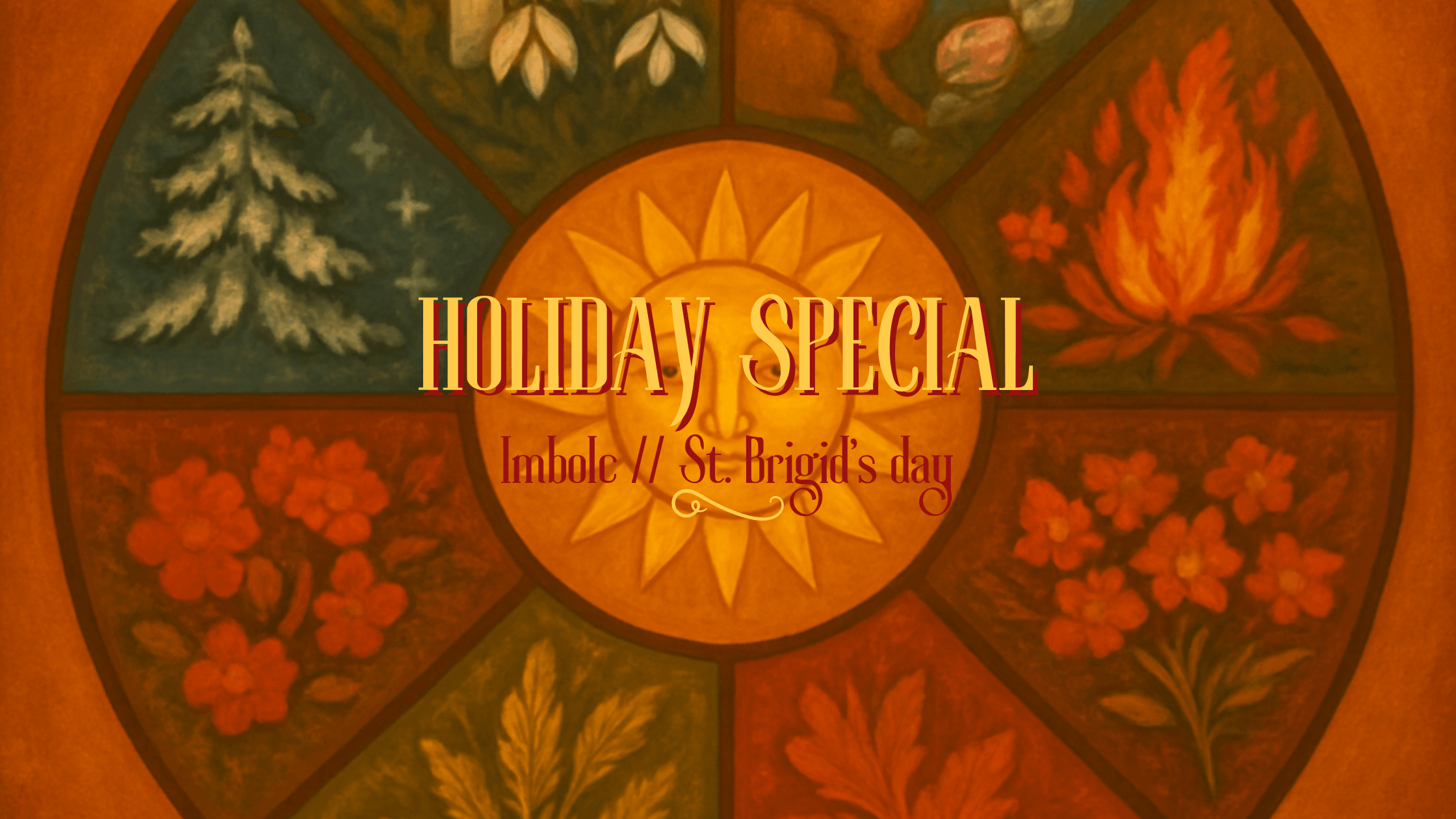
As the snow begins to recede and the first crocus pushes through frost, Imbolc stirs quietly in the world. It heralds the slow return of light, a gentle promise that the harshest nights are passing and the warmth of spring will come again.
✨Imbolc 2026 & the Full Moon
This year, Imbolc coincides with a full moon, a rare alignment that brings a luminous energy to the day. A full moon enhances clarity and insight, encouraging attunement to the subtle stirrings of life that Imbolc honours. Just as the moon reaches its peak, our intentions and awareness can expand, guiding us in what to nurture, release, and carry forward as the days gradually lengthen.
🌙 What is Imbolc?
Date: February 1st or 2nd, marking the midpoint between the winter solstice and the spring equinox.
Origins & Meaning:
Imbolc is widely regarded as one of the most archaic festival days in the traditional Irish calendar. Its origins reach back to Neolithic farming communities, whose survival depended on carefully attuned calendrical rites. These early agricultural societies developed seasonal markers to determine when to sow and harvest, when livestock could return to pasture, and when homes and fields had to be secured against winter storms. The name Imbolc derives from the Old Irish Imbolg, often interpreted as “in the belly,” referring to pregnant ewes and the first subtle signs of life stirring beneath the land’s winter stillness.
Sacred Figure:
The festival later became associated with Brigid, whose presence bridges pre-Christian and Christian traditions. As a figure of fire, inspiration, healing, and craft, Brigid embodied both the practical and the sacred, reflecting the values of pre-modern ritual practitioners who saw creativity, protection, and fertility as intertwined forces essential to communal survival.
Ritual Life & Symbolism:
In rural Ireland, Imbolc was observed through a rich tapestry of seasonal customs. People watched for hedgehogs emerging from hibernation, believed to be a sign of favourable weather. Special foods were prepared, straw girdles and caps were made, and red ribbons known as Brat Bride (Brigid’s cloak) were placed on homes for blessing and protection. Families crafted Brigid’s crosses and straw figures called Brideog, which were carried to sacred springs thought to hold healing and fertility powers. The festival often concluded with sung charms, offering protection and renewal as the land began its slow return toward light.
Core Themes:
Light, purification, fertility, protection, renewal, and creative awakening.
“Sweep away the residue of the past. Light a candle for what you wish to nurture.”
🔮 The Psychological Alchemy
Seasonal markers matter to the human nervous system. Subtle increases in daylight influence circadian rhythms, supporting alertness, motivation, and emotional regulation. Even small shifts in light exposure can affect mood, particularly after the introspective contraction of winter, as research has shown (Grimaldi et al., 2008).
Rituals, especially those involving repeated physical actions, help encode intention in the brain: lighting a candle, clearing a small space, or writing by hand. These acts anchor abstract hopes into sensory experience, and what we do with our hands often settles more deeply than what we think alone.
Imbolc reframes the idea of a fresh start. Rather than a sudden reset, it offers a seasonal return—an invitation to revisit intentions with patience and realism, shaped by what winter has revealed. The interplay of light, rhythm, and ritual mirrors the ways pre-modern practitioners used repeated seasonal observances to regulate mood, reinforce focus, and prepare for the fertile cycles ahead.
🕯️ Combining Ritual & Intention
In the days leading up to Imbolc, small daily rituals are enough—five minutes is sufficient.
- Light a candle at the same time each day.
- Clear one small space rather than the entire home.
- Write a few lines reflecting on what winter asked of you, and what spring may be inviting.
Journaling at this time can gently explore the shift from endurance to emergence: what is ready to be carried forward, what can be released, and what still needs attention before growth accelerates. Repeating these simple acts in the days leading up to February 1st sharpens focus and helps you step into Imbolc feeling grounded, refreshed, and inspired.
🌸 Closing Inspiration
Imbolc stands as a bridge between inner work and outward movement. It honours the quiet labour of winter while orienting us toward action that is rooted rather than rushed. This is not yet the season of bloom, but of warming the soil, of listening for what wants to rise.
Light your candle. Clear your space. Step carefully into the season of beginnings, and allow the subtle stirrings of life to meet your intention.
Imbolc 2026
📚 Appendix
☉ Further Reading & Reference
- Valerie van Mulukom – Psychological Wellbeing
On meaning-making, ritual, and their role in emotional resilience and mental health. - Valter, T., 2003 – Seasonal Rituals and Folk Practices in Northern Europe
Discusses pre-modern and folkloric seasonal practices in relation to human psychology. - Grimaldi, D. et al., 2008 – Effects of light on human circadian rhythms and mood
Explores how light exposure influences emotional regulation and wellbeing. - University of Sydney – How Light Can Shift Your Mood and Mental Health
Explores the impact of light exposure on mood, circadian rhythm, and seasonal wellbeing. - Boston Public Library Blog – Imbolc, Setsubun, Lunar New Year
A cultural overview of seasonal festivals and their shared themes of cleansing and renewal. - Learn Religions – History of Imbolc
An accessible introduction to the history, symbolism, and seasonal roots of Imbolc. - Irish Pagan School – Irish Pagan Ritual for Imbolc
Modern ritual practices grounded in Irish tradition, centred on fire, poetry, and preparation.
Pingback: Beltane: The Feast of Blooming & Belonging - Bloomfire&co.
Pingback: Litha: Feast of Light and Courage to Bloom - Bloomfire&co.
Pingback: Circadian Clock: Light and the Seasons - Bloomfire&co.
Pingback: An Update on the Season Ahead - Bloomfire&co.