
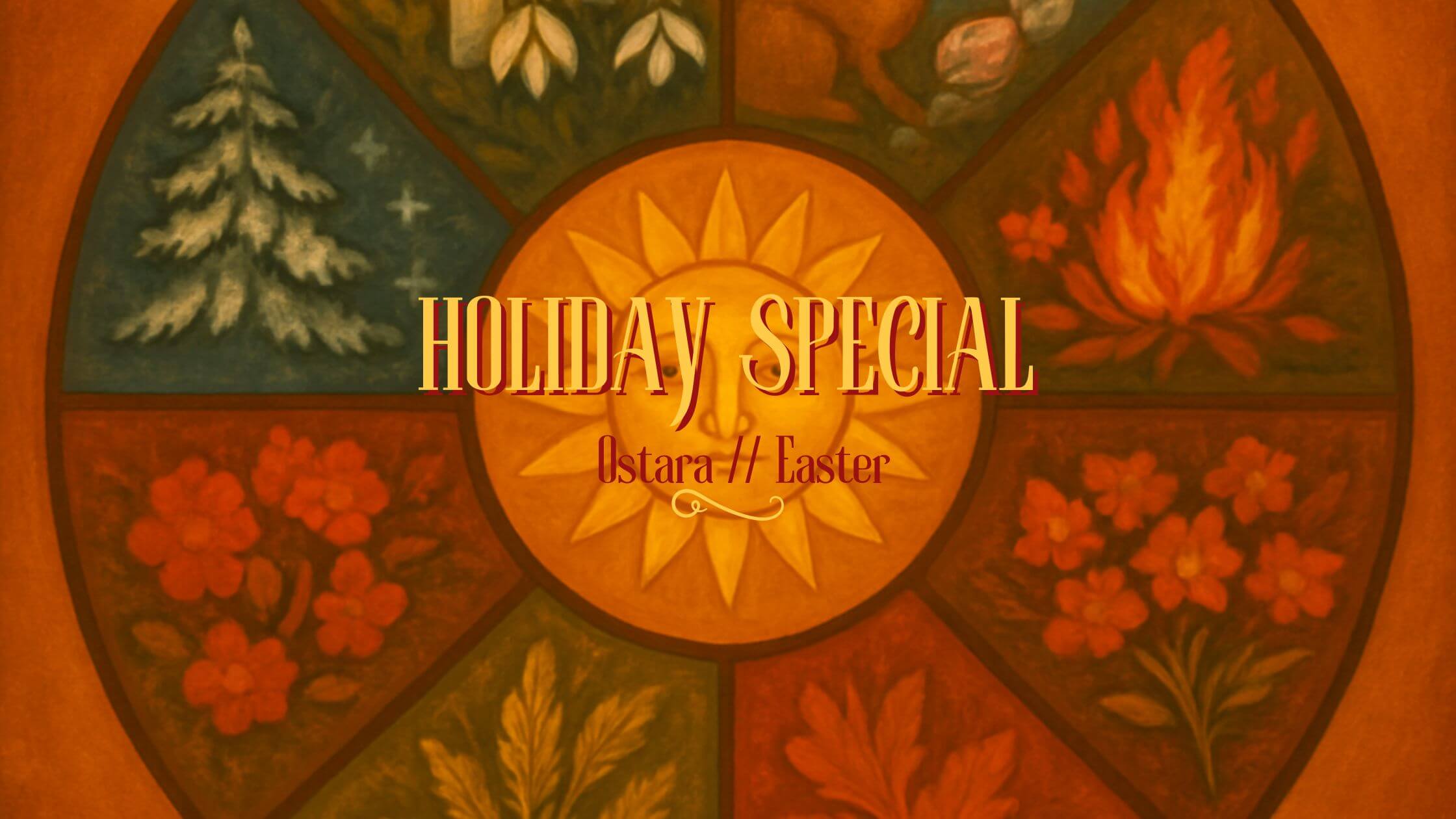
As far as seasons go, Ostara marks the true beginning of spring. Day and night finally stand in balance. Light and dark meet as equals, no longer frozen in stillness, but tilting gently toward growth.
Imbolc asked us, what are you willing to tend to before there is proof?
Ostara answers with hope that has begun to show itself. The soil is softer. The days are longer. Something is visibly, undeniably stirring.
🌙 What is Ostara?
Date: Around March 20–21, Ostara aligns with the Vernal Equinox. It is the midpoint between Imbolc’s quiet promise and Beltane’s full, embodied bloom.
🌿 Origins and Meaning
Ostara, sometimes called Ēostre, is linked to a Germanic goddess first mentioned by the 8th-century monk Bede. She is associated with spring, fertility, and dawn. Her name shares linguistic roots with East, the direction of the rising sun, symbolising renewal, beginnings, and the return of light.
While historical records of her worship are sparse, Ostara has endured as a seasonal archetype rather than a fixed deity. She represents the moment when life no longer hides underground, when growth becomes visible, tentative, and brave. Eggs, hares, and early blossoms became her symbols not because of excess, but because they carry life in its most fragile, hopeful form.
Ostara is not about sudden transformation. It is about gentle evidence. The kind that reassures us that our quiet tending mattered.
Seasonal Symbolism & Historical Roots:
The Christian holiday of Easter may share linguistic roots with Ēostre or with Ēosturmōnaþ, the Old English name for a spring month recorded by Bede. These names are often connected to older Indo-European roots associated with dawn, shining, and the coming of light. Across several Indo-European traditions, spring and sunrise were linked through goddesses such as the Greek Eos, the Roman Aurora, and the Vedic Ushas, all of whom personify the arrival of dawn. In this way, Ostara carries not only the symbolism of spring itself, but also the wider ancient motif of light returning, the world awakening, and life beginning again
Core Themes:
Balance, rebirth, and awakening.
“In the season of Ostara, we cultivate the right conditions and witness the soft blooming of life around and within us.”
🔮 The Psychological Alchemy
Ostara shifts the conversation from ‘Why am I not blooming?’ to ‘What conditions am I living in?’ Habit research suggests that much of daily behaviour is shaped less by conscious intention than by repeated cues, learned associations, and stable environments. Rather than approaching growth as a question of willpower alone, Ostara invites us to re-examine the habits, environments, and daily cues that shape our lives.
Psychologically, habits are not the same as conscious intentions. Research suggests that habit associations are represented in learning and memory systems separately from deliberate decisions, which helps explain why so much of daily behaviour happens automatically. Walking into a dark room, for example, can trigger reaching for the light switch without any active decision being made. In this sense, our surroundings do not merely reflect our habits, they help produce them. Habits are often triggered by stable contexts rather than conscious decisions (Wood et al., 2005).
Food
If we wish to feel better through nourishment and mindful eating, we often begin by changing the conditions around food itself. Behaviour is shaped by the environment. We tend to eat what is visible, accessible, and familiar. Small shifts in our surroundings can therefore support more intentional habits, not through force, but through design.
Plants
In plant science, growth is conditional. Light exposure, soil nutrients, water availability, temperature, and root space all shape how a plant develops. Growth is an outcome of the environment. A seed does not fail morally, it responds biologically. When light increases after the equinox, photosynthesis increases. When roots have more space, expansion follows.
🌸 Ritual, Recipes & Plants
At Ostara, ritual becomes most meaningful when it is woven into ordinary acts of care.
- A morning walk offers more than symbolism. Exposure to greenery has been associated with reduced stress, while early sunlight helps regulate circadian rhythm and support alertness. Simply paying attention to the season as it changes can also deepen a sense of wellbeing.
- Repotting plants offers another quiet ritual of alignment. Changing a plant’s container changes its growth capacity, making it a simple but powerful symbol of environmental redesign. Rather than forcing growth, it reminds us to create the conditions that support it.
- Preparing food with fresh leaves, herbs, and colourful ingredients invites sensory gratitude and attentiveness. Colour diversity in plant foods often also reflects a wider range of beneficial nutrients, allowing nourishment to become both practical and symbolic.
- Spring cleaning can be understood as an Ostara practice. Physical order can reduce cognitive load, fresh airflow can improve alertness, and the act of clearing space can create an embodied sense of reset. In this way, ritual is not separate from daily life. It is daily life, approached with intention.
🕯️Closing Inspiration
Ostara is a season of visible growth and gentle joy. What you plant now—whether seeds, herbs, or intentions—will be ready to harvest by Litha (midsummer), Lughnasadh, and Mabon. But the festival is not only about tending food and plants. Bring a sense of play into the season: paint eggs, hide them for children to find, or invent simple spring games that celebrate light, movement, and curiosity. By blending care with creativity and fun, you honour the season while supporting growth in all its forms.
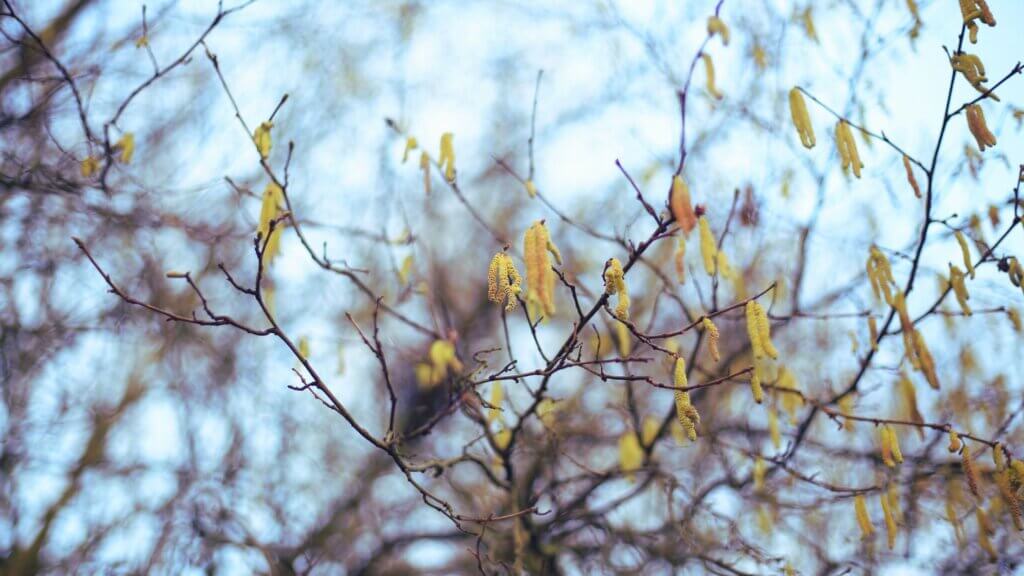
Ostara 2026
📚 Appendix
☉ Further Reading & Reference
- Wood, W. et al., 2005 – Changing Circumstances, Disrupting Habits
Examines how altering environments can support habit change and behavioural flexibility. - Ostara Collective – Connection at the Spring Equinox
Explores seasonal practices and communal connection around Ostara. - Feral Wood Witch – Ostara
A practical guide to celebrating the Spring Equinox with ritual, herbs, and seasonal awareness. - Learn Religions – History of Ostara
An accessible introduction to Ostara’s history, symbolism, and seasonal roots. - Smithsonian Magazine – The Ancient Origins of the Easter Bunny
Explores the Easter hare’s roots in European prehistory, its connection to the goddess Eostre,
and how the figure became a cultural symbol of spring, rebirth, and renewal.
Amazing bloom I read through your blog very informative learned about a morning walk Exposure to greenery has been associated with reduced stress.
Yes, who would have thought that huh? But it is science 🙂 <3
Pingback: The Psychology of Creating New Habits - Bloomfire&co.